
(我的花)
(镜花水月) Mirror Flower, Water Moon.
Dear warm kind eyes,
The longing nostalgia, yet factually foreign yearning, both hugs and tears me at the same time; as reality is as lonely as uncertainty’s gravity.
It sucks me into an isolation, a pair of black holes whose ending follows only upon the epilogue of my death.
But how can or do I let go, when I still hope for its fruition?
But this hope, o isolated seawall, am I simply hearing the wistful echoes of my heart?
Fear and anger plague me — for the little girl whom wishes to stay.
As I whisper, my narrative echoes into a song, but one whose chorus can only be arranged upon meeting a threshold of narrative completion.
But though I try to comprehend, how can I arrange the peaks whilst the story still continues?
Will this story ever end? Or has it yet to begin?
(陽聖花’s Lament)
To love is to experience the surplus beauty of what you appreciate and find beautiful in this world — in reference to what is not necessarily needed for survival, but can help in making life more enjoyable and pleasant along the way.
Given this, it would be a shame to stop yourself from loving something (anything), because that would prevent you from being able to freely experience and enjoy the form of beauty that you have come to love and appreciate in, and about, this world. In addition to this, the inadvertent act of you withholding yourself from experiencing your own love can prevent you from being able to appreciate the beauty of yourself as well — as given the intimate nature of emotions, only you can feel and truly understand the beauty behind the emotions that you hold for the things and people that you have come to hold love for. This therefore showcases the reciprocal nature of your love, and the subsequent beauty that it represents about you and your life given who you are in this world.
In consequence, it would be nice and kind to yourself to let yourself fall in love — because not only would it allow for you to enjoy and appreciate more of what you find beautiful in this world (external to yourself), it also allows you to fall in love with who you are internally as well (as you are your love, and your love is yours).
Love is beautiful, but love isn’t happiness. In its full spectrum and depth, love also comes with heart-wrenching sadness, loneliness, and pain. But at its core, isn’t that what makes love so powerful? The fact that love embodies and stimulates the full spectrum of human emotions (given traditional understandings of what is considered ‘good’ and ‘bad’). In reflection, love in isolation is not love — or else, it would just be called that individualistic emotion instead of love.
In consideration of this, maybe that is why I associate love with ‘home’, because when I learnt to accept and acknowledge the existence of my own love (without judgement), that was when i finally felt accepted and at home in myself (whereby to love is to be full, transparent, and whole in oneself).
Musical Accompaniment(s):
• ___
• ___
• ___
Part 1: My Love.
Dear my beloved rock,
Thank you for teaching me how to love. Through you, I was able to learn about the particular facets of life that I find beautiful and appreciate about this world. And as a result, I came to better understand the consequent beauty and existence of me as well (given the beauty of my experience, emotions, and feelings towards you). Through you, I came to learn about how I love, what I love, and the simple fact that I can love; and through you, I had the courage to feel and experience more of me (my love). For that, I will be forever and eternally grateful, because along the long and arduous path to you, I came to meet and fall in love with me (myself).
I will forever remember and reminisce on you and the impact you have had on my life, because since the beginning of ‘you’ in me, you have since become a part of me in regards to who I was, who I am, and who I will continue to become (and am becoming) going forward as well. Thank you for existing, for being born, and for existing in my life (as you are).
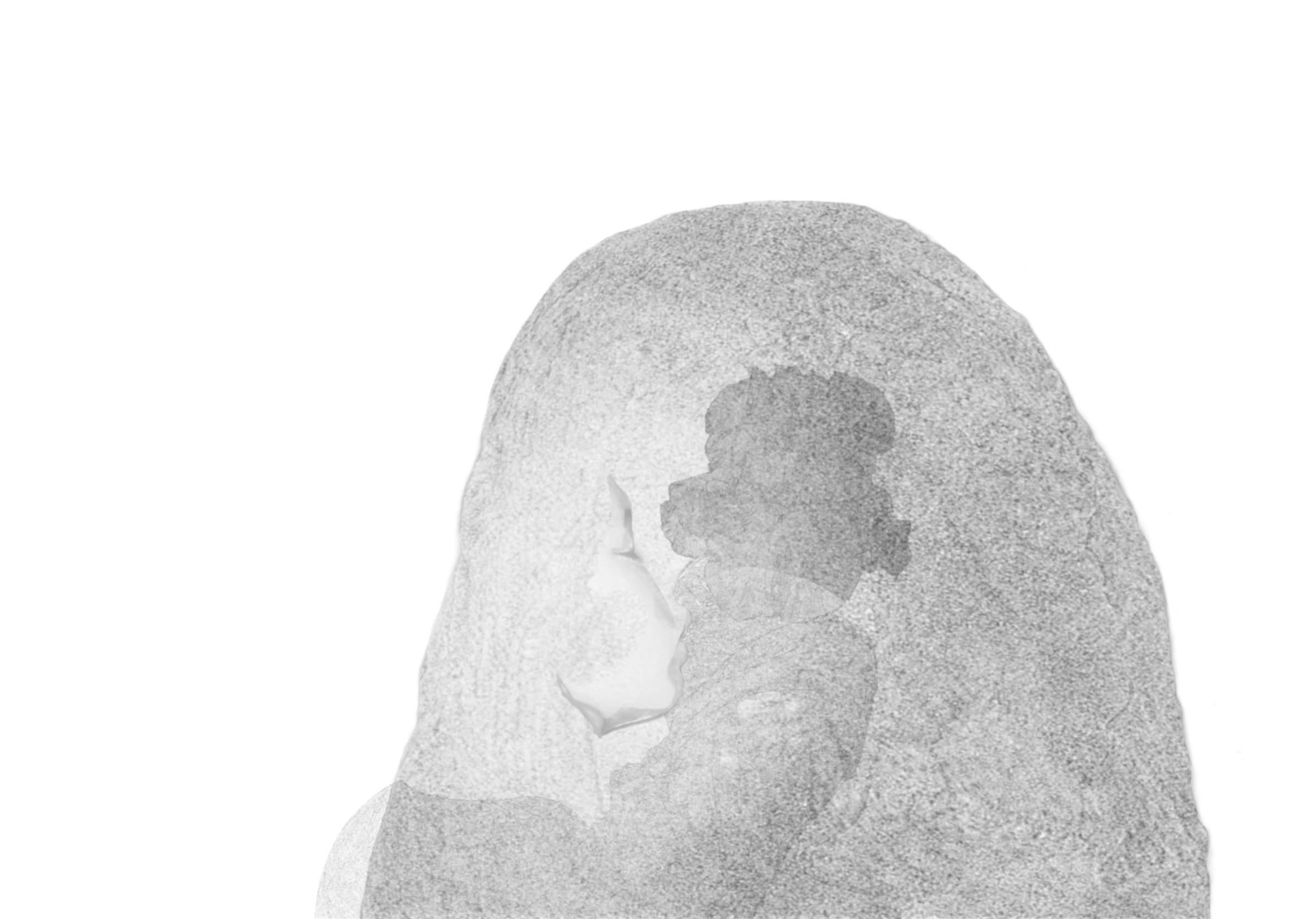
The flower always thought of itself as being alone and unseen — blooming to and within its feelings of love without external witness, as it remained hidden behind the shadows of the rock and its dreams amongst the stars. Amidst its yearnings for a home that didn’t yet exist, the flower wandered endlessly in search of its unconditional dream — accompanied by only herself and one little girl, one whose whispers flowed like a song, guiding her towards her dream of heartfelt rest.
As she ventured into her journey, overtime, the flower realized that instead of being hidden away, she was in fact being protected by the rock, as she would have been undoubtedly washed away had it not been for the warmful embrace and patience of the rock. Despite her prior assumptions concerning the source of her yearnings, sadness, and pain, the rock was in fact the catalyst of her dreams, as it provided her with the adequate space, time, and energy to allow for her initiation into her own love — in her own time, steadily unrushed. In retrospect, this process of gentle blooming allowed the flower to garner new rigor, strength, and hope in (and for) life. The rock allowed the flower to understand the reciprocal (and unprecedented) nature of her love, as she learnt to receive happiness as both the recipient and sender of her love. After years of tumultuous thought and reflection, this process was made only possible given the honest and vulnerable opening of her heart (to the world, but most importantly, to herself).
Musical Accompaniment(s):
• [PL] Spring in love
• [kanegi.] saving grace
• [george] look at me